A critical care paramedic is a paramedic with extra training who cares for ICU-level patients during transport, mostly between hospitals by ground ambulance. The patients are on ventilators, several IV drips or devices such as balloon pumps: the transfers a regular ALS truck doesn’t take. The license underneath is a paramedic license. The critical care part comes from a course, a board exam such as the CCP-C, your medical director and, in some states, a state critical care license or endorsement.
On our board on November 13, 2026, flight and critical care transport (CCT) paramedics posted a median $38 an hour across 57 US listings with pay, against $35 for ground 911 paramedics. This guide covers the ground CCT job. Flying has its own flight paramedic guide.
Critical care paramedic at a glance
| Question | Short answer | Source |
|---|---|---|
| What the job is | ICU-level care in transport, mostly hospital to hospital: vents, pressor drips, pumps, balloon pumps | IBSC CCP-C handbook, April 2026 |
| License | Paramedic. Tennessee, Alabama, Colorado, Wisconsin and California are among the states that add a critical care endorsement or definition | State EMS offices |
| Main credentials | CCP-C: IBSC’s board exam. CCEMT-P: UMBC’s course certificate, “not a license or certification” | IBSC; UMBC |
| What it costs | CCP-C exam $285 to $385. Courses we checked: $1,200 to $1,500 | IBSC; course providers, November 2026 |
| Experience | IBSC requires only a paramedic license and encourages 3 years. The courses and state rules we checked ask for 1 to 3 years | IBSC; course providers; state EMS offices |
| Pay | Median $38 an hour for flight and CCT paramedics together (57 listings), $35 for ground 911 (175). Ground CCT isn’t split out | Our board, /jobs/flight, November 13, 2026 |
| EMTs and AEMTs | Yes, in the EMT seat: driving, the truck, moving the patient. Not the critical care side | Boston MedFlight; our board |
What does a critical care paramedic do?
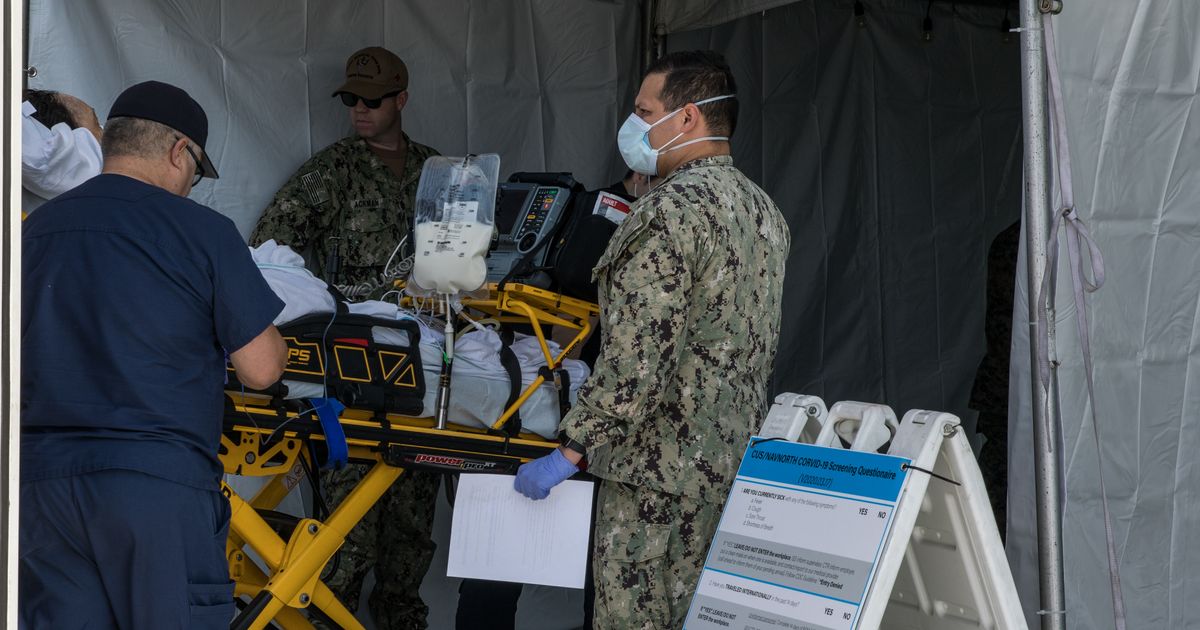
A critical care paramedic keeps an ICU patient stable from one hospital to the next. You take report from the sending team, move the patient onto your monitor, vent and pumps, and run all of it in the back of the truck until the receiving unit takes over. Boston MedFlight describes its ground teams’ work as interfacility transport “between ICUs, cardiac centers, and specialty hospitals.”
The patient range is wide. The International Board of Specialty Certification (IBSC) builds its CCP-C exam around airway and sedation, cardiac, neuro, respiratory, trauma and burn, maternal and fetal, and pediatric patients. Its April 2026 handbook also names the devices you’re expected to know: intra-aortic balloon pumps (IABP), Impella heart pumps, ECMO and ventricular assist devices (VADs).
What a critical care paramedic can do that a regular paramedic can’t
California spells out the difference in its regulations. On interfacility transports, a California critical care paramedic may also do the following when the local EMS agency’s medical director approves it (Title 22, section 100091.02):
- Set up and maintain mechanical ventilators, chest drainage systems and IV pumps.
- Give blood and blood products.
- Run heparin, nitroglycerin and norepinephrine drips, glycoprotein IIb/IIIa inhibitors and clot-busting thrombolytics.
- Maintain total parenteral nutrition (IV feeding).
Other states and services draw the line in their own place. What you may do on the truck comes from your state’s rules and your medical director’s protocols, not from a certificate, and this guide doesn’t replace either.
The paperwork changes too. California’s required CCP course content includes “critical care vs. 9-1-1 system,” “hospital documentation and charts” and “physician orders vs. ALS protocols” (Title 22, section 100092.07). On a CCT run you work from the sending physician’s orders and the patient’s chart, not only your protocol book.
Who’s in the back: crew models
Crews vary by service, so ask before you apply. Boston MedFlight, a nonprofit that runs helicopters, planes and 9 critical care ground ambulances, staffs every transport with a critical care transport nurse and a critical care paramedic. Its website says both hold specialty certifications in critical care transport, and names the FP-C for its paramedics. EMTs ride its ground runs to ready the vehicle, help move the patient and support the clinical team.
A nurse-and-medic crew and a two-medic crew are different jobs. On a two-medic truck, every drip and vent change is yours.
IFT, 911 or CCT: where critical care transport fits
Interfacility transport (IFT) is any ambulance move between facilities. Most IFT is BLS or ALS work with patients who need monitoring but not ICU care. Critical care transport is the top tier of IFT: the same hospital-to-hospital run with a patient who needs ICU-level care on the way. 911 is scene work. For a working medic choosing between them, the difference is the patient in the back.
| Work | Typical patient | Crew | What you do | Paramedic median on /jobs/paramedic |
|---|---|---|---|---|
| BLS IFT | Stable: discharges, dialysis, rehab and nursing home runs | Two-person crew, at least one EMT | Lift, watch vitals, chart | Not counted |
| ALS IFT | Needs a monitor, an IV or an ALS medication | Paramedic and partner | Monitor, IV, meds within protocol | $33 (10 listings) |
| CCT | Vented, on pressors or a device, moving from an ED or ICU to a specialty center | Critical care paramedic with a nurse, a second medic or a respiratory therapist, often with an EMT | Vents, pumps, titrating drips, lab values | $37, flight and critical care (54) |
| 911 | Anyone, at the scene | Paramedic and partner | Assess, treat, transport, back in service | $35, 911 and municipal EMS (157) |
The pay column comes from our paramedic jobs page on November 13, 2026. That page groups listings by work setting, so its figures differ slightly from those on our flight and critical care page. The BLS crew rule is Medicare’s minimum for payment: at least two people, one of them at least an EMT-Basic (42 CFR 414.605). States can require more.
Why CCT exists: Medicare’s specialty care transport level
Medicare pays a higher rate for critical care runs, and that rate is the business behind the job. Its rules call this level specialty care transport (SCT): moving a critically ill or injured patient between facilities “at a level of service beyond the scope of the EMT-Paramedic.” It applies when the patient needs ongoing care from a health professional in a specialty area, such as nursing, respiratory care “or a paramedic with additional training” (42 CFR 414.605).
The fee schedule weighs each ground level in relative value units (42 CFR 414.610):
| Ground ambulance level | Relative value units |
|---|---|
| BLS, non-emergency | 1.00 |
| ALS level 1, non-emergency | 1.20 |
| ALS level 2 | 2.75 |
| Specialty care transport | 3.25 |
A specialty care run carries more than three times the base weight of a BLS transfer, before mileage. That’s why services build and train CCT crews. It doesn’t set your rate; employers do.
Is IFT easier than 911?
Routine IFT is usually calmer and more predictable than 911. Critical care IFT is not easier: the patients are often sicker than most 911 patients, and the work is vent settings, drips and lab values instead of scenes.
Medics split on it. In an October 2026 r/NewToEMS thread on ALS IFT, one medic wrote, “I’ve done far more medicine on IFTs than 911s,” listing medications, intubation, lines, pacing and balloon pumps. Another, who moved to a market with only IFT jobs, called it “a massive skills drain compared to 911,” even with CCT work in the mix. The service makes the difference.
For a newer medic, busy 911 years usually come first, because flight and critical care programs count them. For a medic who has done those years and wants depth over scene volume, CCT is where IFT gets serious.
Who runs critical care transport?
Ground CCT jobs come from four kinds of employer: hospital systems, private ambulance services, flight programs with ground units, and children’s hospital transport teams.
- Hospital programs. Hospitals run transport teams for their own transfers. A ground critical care paramedic on r/Paramedics (July 2026) described working for “a busy hospital based CCT agency.”
- Private ambulance services. Private services hire critical care transport paramedics for their CCT trucks. American Ambulance, based in Fresno County, California, runs its own CCP course for paramedics with a valid license and 3 years of experience. To be accredited locally as a CCT paramedic there, you also need 100 clinical hours and a job with a CCT provider the local EMS agency has approved. Northwest Rescue, a private service in northern Illinois, says it runs adult, pediatric and neonatal critical care transports and hires EMTs, paramedics and critical care paramedics.
- Flight programs with ground units. Boston MedFlight runs 9 critical care ground ambulances alongside its aircraft, staffed by the same clinicians who fly.
- Children’s hospital transport teams. Pediatric teams post their own jobs, including EMT positions.
On November 13, 2026, the latest listings on our flight and critical care jobs page included “Critical Care Paramedic” postings in Virginia Beach and Newport News, Virginia, Orlando, Florida and Houston, Texas. None showed pay.
How to become a critical care paramedic
You become a critical care paramedic in five steps: a paramedic license, ALS experience, a critical care course, a board exam such as the CCP-C, and your state’s and employer’s sign-off.
- Get your paramedic license. Every route into critical care starts there.
- Build ALS time. Busy 911 or ALS IFT. IBSC encourages 3 years in a critical care or transport setting before its exams.
- Take a critical care course. UMBC’s CCEMT-P course or a state-approved program. The four we checked cost $1,200 to $1,500.
- Pass a board exam. The CCP-C for ground work, or the FP-C if you plan to fly.
- Meet your state’s rule, then get credentialed. Some states add a license or an endorsement. After orientation, your employer’s medical director signs you off.
Do you need a course to sit the CCP-C?
No. IBSC’s only eligibility requirement for the CCP-C is “a current unrestricted paramedic license in the state or country of practice.” IBSC lists a foundational critical care course, 3 years of experience, 6 to 12 months of self-study and a review course under “Recommendations” (checked November 14, 2026). Some answers online say the exam requires a course; IBSC’s own rules don’t. Tennessee, Wisconsin and California do require an approved program for their state credential.
How much experience programs and states ask for
You can sit the CCP-C the day you hold an unrestricted paramedic license, but courses and states gate on years: 1 to 3 years as a paramedic in the ones we checked.
| Who | What they ask for | Required or recommended |
|---|---|---|
| IBSC, CCP-C exam | A current, unrestricted paramedic license; 3 years in critical care or transport | License required; years recommended |
| UMBC CCEMT-P course | Paramedic or RN, about 1 year in that role | Recommended |
| Vanderbilt CCP program | 2 years as a paramedic; BLS, ACLS, PALS and PHTLS or ITLS | Required |
| Tennessee-approved critical care programs | A Tennessee paramedic license and 2 years as an advanced care provider; ACLS, PALS and an advanced trauma course | Required (state rule) |
| Alabama critical care endorsement | 3 years as a licensed paramedic | Required |
| American Ambulance CCT course (Fresno County, California) | A valid paramedic license and 3 years as a paramedic | Required (2025 course page) |
How long it takes
The course takes weeks. The years come first. UMBC’s own 2026 CCEMT-P class ran July 12 to 25, and host sites can spread the course’s 11 days over 2 to 10 weeks. Vanderbilt’s CCP program meets one day a week for 16 weeks. Granite Mountain Training’s course is 200 hours, mostly online, with one or two lab days.
CCP-C vs CCEMT-P vs FP-C: which critical care credential do you need?
The CCP-C is IBSC’s board certification exam for critical care paramedics, built around ground transport. CCEMT-P is the critical care course of the University of Maryland, Baltimore County (UMBC). Passing its final exam earns a certificate, and UMBC says plainly: “This certificate is not a license or certification.” The FP-C is IBSC’s flight paramedic exam. UMBC offers its course as preparation for the FP-C and CCP-C.
| CCP-C | CCEMT-P | FP-C | |
|---|---|---|---|
| Who issues it | IBSC | UMBC, taught at UMBC each July and at host sites | IBSC |
| What it is | Board certification | Course completion certificate | Board certification |
| Built for | Ground critical care transport | Critical care interfacility transport | Air medical transport |
| Who can take it | A current, unrestricted paramedic license | Paramedics and RNs, about 1 year in the role recommended | Same as the CCP-C |
| The test | 135 questions (110 scored), 150 minutes, pass mark 68 of 110 | The course’s final exam | 135 questions, 150 minutes, pass mark 73 of 110 |
| Cost | $285 for IBSC affiliate members, $385 for non-members | $1,300 for UMBC’s 2026 course; host sites set their own price | Same as the CCP-C |
| Valid for | 4 years | 3 years | 4 years |
| Renewal | 100 continuing education (CE) hours (75 clinical, 16 of those from an approved review course) or a retest; $285 for affiliate members, $385 for non-members | 48 critical care CE hours at the ALS level ($60), or an exam at UMBC ($60 plus an exam fee) | Same as the CCP-C |
| Named in postings on /jobs/flight | 16% | 4% | 48% |
The last row is the share of the 163 distinct postings on our flight and critical care page on November 13, 2026 (each repost counted once) that named each credential. A posting can name more than one. UMBC’s September 2025 renewal packet lists its renewal exam fee as $50 in the policy and $110 on the request form, so ask UMBC which applies.
What the CCP-C exam covers
IBSC’s April 2026 candidate handbook splits the 110 scored questions into 12 areas. The biggest are airway, anesthesia and analgesics (14 questions), cardiac (13) and trauma and burns (12). Transport and safety on the ground is 7. Each question has three answer choices, and there’s no penalty for guessing.
If you fail, you can retest after 30 days, up to three attempts in all, at the full fee. Let the certification lapse and you retake the exam: IBSC has no grace period, and CE sent in less than 30 days before expiry costs a $125 late fee.
Critical care courses and what they cost
Prices are each provider’s own, checked November 13, 2026.
| Course | Format | Length | Price | Entry ask |
|---|---|---|---|---|
| UMBC CCEMT-P (Baltimore, Maryland) | In person | July 12 to 25, 2026 | $1,300 | Paramedic or RN, 1 year recommended |
| Vanderbilt CCP program (Nashville, Tennessee) | In person one day a week, with clinicals in Vanderbilt ICUs; run with Vanderbilt LifeFlight | 16 weeks | $1,200, plus a $80 state test and a $90 Tennessee CCP application | 2 years as a paramedic |
| Granite Mountain Training (Prescott, Arizona) | Online, with 1 or 2 lab days; approved by the Arizona Department of Health Services | 200 hours | $1,300 | Certified paramedics |
| American Ambulance CCT course (Clovis, California) | In person, two days a week | 2025 class: March 4 to April 24 | $1,500 | 3 years as a paramedic |
The board exam is extra: Granite Mountain notes that the FP-C and CCP-C “require separate examinations.” Some employers run or pay for their own course, so ask before you pay.
Which to take first
If you’re staying on the ground, the CCP-C fits the job. If you want to fly, the FP-C is the one flight listings name most: 48% of the postings on our flight and critical care page. Some ground programs name the FP-C too: Boston MedFlight, whose crews work air and ground, lists it for its paramedics. Our flight guide compares the two exams for medics who plan to fly.
Which states make critical care a license level or endorsement?
Every critical care credential in this section sits on top of a paramedic license. Some states add their own step. The states in this table are ones we checked with each state’s regulator on November 13 and 14, 2026. This isn’t a complete list, so check with your own state EMS office before you pay for a course.
| State | What it is | What you need | Regulator |
|---|---|---|---|
| Tennessee | Critical Care Paramedic endorsement on a Tennessee paramedic license | Entry to a Board-approved program needs a Tennessee paramedic license and 2 years as an advanced care provider. Then the program and the Board’s endorsement exam, within 2 years of the course | Tennessee rules, Chapter 1200-12-05 |
| Alabama | Critical care paramedic endorsement | 3 years as a licensed paramedic and the FP-C or CCP-C (or the CFRN or CTRN for RN-paramedics); a $12 fee | Alabama Department of Public Health |
| Colorado | Paramedic with critical care endorsement (P-CC) | A Colorado paramedic certificate, a current IBSC card and a current National Registry paramedic card | Colorado Department of Public Health and Environment |
| Wisconsin | Critical care endorsement on a paramedic license | A Wisconsin paramedic license and training on the Wisconsin critical care curriculum, or an approved program, within the 24 months before you apply | Wisconsin Administrative Code, DHS 110.088 |
| California | Critical Care Paramedic, defined in state regulations | A California paramedic license, an approved CCP training program, the IBSC CCP certification, and accreditation by the local EMS agency where your employer is based | California EMS Authority |
Moving states? Check the critical care rule before you move, not after. Our best states guide covers licensing and pay by state more broadly.
What our board shows: flight and critical care pay on November 13, 2026
On November 13, 2026, flight and CCT paramedics on our board posted a median $38 an hour across 57 US listings with pay. That’s $3 above ground 911 paramedics, at $35 across 175 listings. Our board aggregates, curates and vets EMS listings, and we show pay whenever the employer states it.
| US listings with pay, /jobs/flight | Median | Middle half | Listings |
|---|---|---|---|
| Flight and CCT paramedics | $38 | $34 to $44 | 57 |
| Flight nurses | $41 | $36 to $52 | 13 |
| Ground 911 paramedics, whole board | $35 | $32 to $40 | 175 |
- Open jobs: 174 flight and critical care jobs, 37 of them new in the previous 7 days. Only 45% of the US listings showed pay.
- The top end: the top 10% of flight and CCT paramedic rates were $50 an hour or more.
- A ground job near the top: a ground paramedic job in Newport, Oregon was third in the page’s highest-paying row, at $101,000 to $119,000 a year. That’s about $53 an hour at 40 hours a week, though a salaried job on 24-hour shifts reads high per hour.
- States: medians where at least five listings posted pay were Oregon $51, California $50, Hawaii $50, Florida $34 and North Carolina $30.
These figures don’t separate ground CCT from flight: the $38 median covers both.
Critical care paramedic salary estimates on salary sites disagree widely, so this guide uses posted rates. National wages run lower than ours. The Bureau of Labor Statistics puts the median for all paramedics at $29.13 an hour (2025). Our board rates run higher, partly because the board leaves out listings below its pay floor. The live figures are on flight and critical care jobs.
How we counted: these figures come from our flight and critical care page (/jobs/flight) on November 13, 2026. Each posting counts once, at the middle of its posted range, in whole dollars. Salaries count as 2,080 hours, day rates are left out, and only US listings count toward pay. Our paramedic page (/jobs/paramedic), used in the IFT table, groups listings differently, so its figures for similar groups differ slightly: $37 across 54 listings for flight and critical care, and $35 across 157 for 911.
CCT vs 911: is the move worth it?
Flight and CCT jobs together posted $3 an hour more than ground 911 at the median: $38 against $35 on our flight and critical care page on November 13, 2026. Ground CCT alone may pay no more than 911. On November 8, 2026, our flight paramedic guide counted 11 paramedic listings with a ground critical care title at a median $34 an hour, against $35 for ground 911 paramedics (158 listings). These are posted rates, not what you’ll earn. Count what the move costs:
- The course: $1,200 to $1,500 at the programs we checked, unless your employer pays.
- The exam: $285 to $385, non-refundable.
- Keeping it: 100 CE hours and another $285 to $385 every 4 years for the CCP-C.
- The schedule: ask the shift length and how often transports run past it.
- The rate itself: ask for the base rate and the overtime rules separately.
Flight isn’t the only higher-paying move: on our paramedic page, fire department jobs posted a median $38 across 88 listings the same day. Our ranking of EMS pay compares every type of work side by side.
Can EMTs and AEMTs work in critical care transport?
Yes, in the EMT seat. CCT services hire EMTs to drive, ready the truck and help move the patient, and some pediatric transport teams post EMT jobs. The critical care work belongs to the paramedics and nurses on the crew.
- Flight programs with ground units. Boston MedFlight posts “Critical Care Transport EMT” and “Critical Care Transport EMT (Driver)” jobs. Its EMTs keep the vehicles ready, help move patients and support the clinical team on ground runs.
- Pediatric teams. On November 13, 2026, our EMT jobs page showed two “EMT-Pediatric Critical Care Transport” postings in Wilmington, Delaware, and one more critical care transport EMT posting. None showed pay.
- Private services. Northwest Rescue in Illinois says it hires EMTs as well as paramedics and critical care paramedics for its transport work.
What isn’t open: the critical care seat itself. The CCP-C needs a paramedic license, the CCEMT-P course takes paramedics and RNs, and every state critical care credential we checked sits on a paramedic license. No critical care credential we checked is open to AEMTs, so on a CCT crew an AEMT works the EMT seat. If you’re weighing the AEMT card anyway, AEMT vs EMT covers what it adds.
The EMT seat on a CCT truck still teaches a lot. You see vents, pumps and pressor drips up close, and you see the work a paramedic license leads to.
From ground CCT to flight
Ground CCT is a common step toward flight: our flight and critical care page tells medics to build critical care experience in “CCT, a busy ALS service, or hospital work.” The route from there, including the FP-C, base schedules and flight pay, is in how to become a flight paramedic.
Before you take a CCT job
- Who is the medical director, and can I read the CCT protocols before I start?
- Which vents, pumps and drips will I run, and how long is orientation before I’m signed off?
- Who’s on the crew: a nurse and a medic, or two medics? Who drives?
- Do you require the CCP-C or FP-C at hire or by a deadline, and who pays for the exam and the course?
- How many transports a shift, and how long is a typical run?
- What’s the shift length, and how are holdovers on long transfers paid?
- Is it hourly with overtime, or salaried? A salaried 24-hour shift reads high per hour.
- Who pays to renew the CCP-C every 4 years: 100 CE hours and a $285 to $385 fee?
From the field: what CCT medics say
These are individual accounts from public posts, not statistics.
- “You can take a one weekend prep class and pass the exams.” A commenter on r/Paramedics (February 2026), arguing that holding an FP-C or CCP-C doesn’t by itself make you a critical care clinician.
- Get the 911 years first. The blunt reply a new medic got on r/Paramedics (June 2026) after passing both the CCP-C and the FP-C: expect 3 to 5 years of busy 911 before a critical care job.
- “FP-C opens all the same doors as CCP-C.” A ground FP-C medic in Texas (r/Paramedics, February 2026), who said a critical care certification is required to be credentialed as an advanced practice paramedic where they work.
- “CCT is absolutely another world.” A commenter in an r/ems thread on hospital-based IFT (July 2026). Another in the same thread: “there might be boring calls but no bullshit calls.” A third: “CCT is like 911 for hospitals.”
- 23 years in, looking for a way out. A ground critical care paramedic at a busy hospital-based CCT agency (r/Paramedics, July 2026), in EMS since 16, posted that they’re looking for work outside EMS and healthcare and can’t find anything that interests them the way medicine does. Better medicine doesn’t keep everyone in EMS.