Here is how to become a flight paramedic: work at least three years as a licensed paramedic in a busy 911 or critical care system. Keep ACLS, PALS and a trauma course current, and earn the FP-C, the flight paramedic board certification. Some programs want it at hire; those that set a deadline most often give you 24 months. On our board, flight and critical care paramedics post a median $38 an hour, against $35 for ground 911 paramedics (November 8, 2026).
Flight paramedic requirements at a glance
Flight programs ask for much the same short list. Here it is, with where each answer comes from.
| What programs ask for | The usual answer | Source |
|---|---|---|
| License | A current paramedic license in the state the program flies | Job postings, IBSC |
| Experience | Three years of busy 911 or ALS at minimum; five preferred at some | Job postings, our board |
| Life support cards | BLS, ACLS, PALS or PEPP, PHTLS or ITLS; NRP for neonatal calls | Job postings |
| Board certification | FP-C, or the CCP-C critical care certification, at hire or by a deadline, most often 24 months | Job postings, our board |
| The FP-C exam | 135 questions (110 scored), 150 minutes, $285 to $385 | IBSC |
| Pay | $38/hr median for flight and critical care (CCT) paramedics, 48 US listings with pay | Our board, November 8, 2026 |
What a flight paramedic does
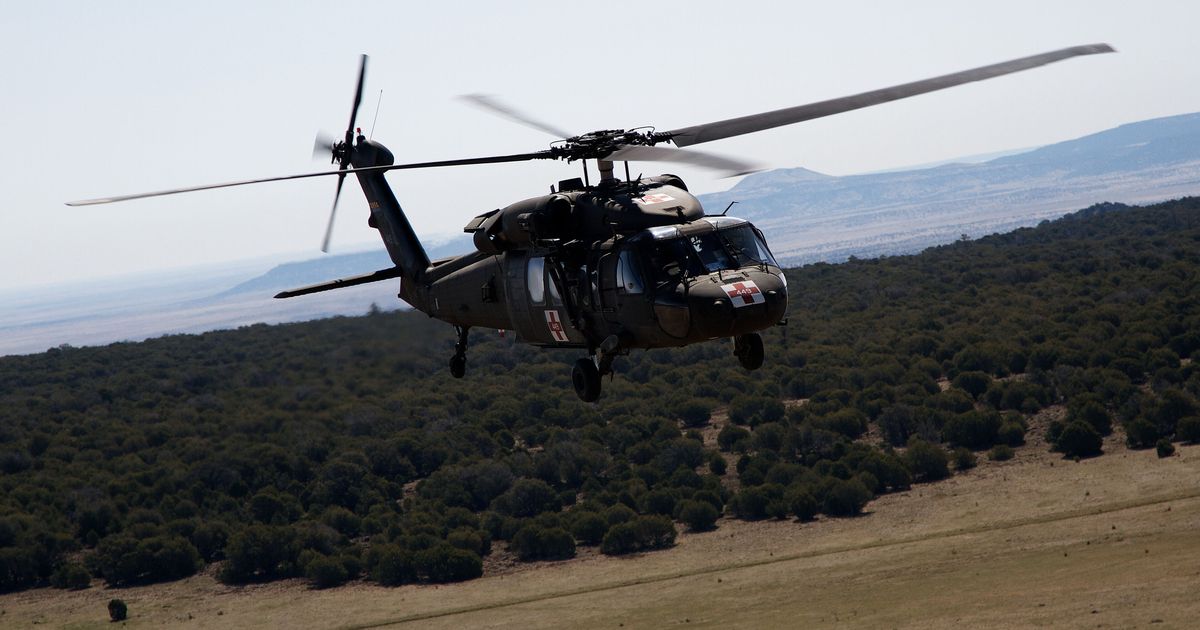
A flight paramedic treats critically ill and injured patients in a helicopter or an airplane, on 911 scene calls and on transfers between hospitals. In HEMS (helicopter emergency medical services), the usual medical crew is one flight paramedic and one flight nurse, with a pilot up front; one large operator publishes exactly that as its standard. A flight paramedic on YouTube (September 2021) notes that some regions fly two medics, two nurses, or a nurse and a physician.
Interfacility transfers bring patients on vents, multiple drips or balloon pumps, the ones a ground ALS truck usually doesn’t move. That is CCT (critical care transport) medicine, and it’s where a strong 911 medic has the most to learn.
Rotor vs fixed wing
Rotor-wing programs fly helicopters to scenes and between hospitals. Fixed-wing programs fly airplanes, and they are used more often for long-distance transfers. The FP-C covers both: its exam outline includes gas laws, hypoxia, time of useful consciousness, and pressurized versus unpressurized cabins.
You don’t have to start on the aircraft you want. A paramedic on r/ems (February 2026) flew fixed wing for two years and earned the FP-C on their own before getting a rotor offer.
Schedules: 24-hour shifts at a base
Both large operators we checked say most of their flight teams work 24-hour shifts. One lists two 24s a week with five days off. Some programs run 12-hour shifts instead. Others run travel rotations: a medic on r/Paramedics (October 2026) described two weeks on, two weeks off, with a rental car, housing and travel paid.
A 24 is not wall-to-wall flying. A flight paramedic who filmed a full shift on YouTube (January 2022) logged two patient flights and one cancellation. They called that “pretty typical.” The rest went to aircraft and bag checks, reviewing the last shift’s charts, and continuing education.
How to become a flight paramedic, step by step
- Get your paramedic license. There is no direct route into flight. National Registry paramedic certification starts with EMT certification and an accredited paramedic program. IBSC (the International Board of Specialty Certification, which runs the FP-C) requires a current, unrestricted paramedic license.
- Run busy 911 for at least three years. Flight programs count your years from there. A flight paramedic on YouTube (September 2021) said programs want medics who have run calls solo or as a dual medic. The flight nurse usually brings the ICU side; you bring the street. If you’re still building those years, compare what 911 pays on our paramedic jobs page.
- Stay put at one good service. The same flight paramedic said programs notice resumes with “seven years of paramedic experience at seven different agencies.” Pick a service with progressive protocols, ideally one where you get vent and RSI experience, and stay.
- Get critical care exposure. Ground CCT, a busy ALS service or hospital work teaches vents, drips and lab values. A critical care course helps. IBSC calls the CCEMT-P course “a great course for paramedics transitioning from a 911 system,” but CCEMT-P is a course certificate, not a board certification.
- Keep your cards current, and teach them. BLS, ACLS, PALS or PEPP, and PHTLS or ITLS are standard. One program we checked wants NRP (the Neonatal Resuscitation Program) by the end of orientation. Two of the four programs we checked prefer instructor certifications.
- Study for and pass the FP-C. IBSC recommends 6 to 12 months of self-study and a review course. Passing before you apply sets you apart, even at programs that would give you two years.
- Meet the crews, then apply widely. Visit bases and talk to the people who work there. Apply to more than one program, and be ready to move.
How long it takes to become a flight paramedic
Plan on three to five years as a working paramedic before a flight program takes a hard look at you. If you’re starting from scratch, EMT and paramedic school come first.
| Stage | Typical time | Source |
|---|---|---|
| EMT course | A few months to a year | One flight program’s own career guide |
| Paramedic program | 1 to 2 years | The same guide; the National Registry requires an accredited program |
| Busy 911 or ALS | 3 years minimum, 5 at some programs | Job postings |
| FP-C study | 6 to 12 months | IBSC recommendation |
| After hire | Orientation, then an FP-C deadline, most often 24 months | Our board |
The minimum is not the norm. One flight paramedic on YouTube (September 2021) said they had been a paramedic “for around eight years” before getting on an aircraft. That is one person’s path, not a rule.
What flight programs ask for
The bar flight listings name most often is three years of experience. Our board had 117 distinct flight and CCT paramedic postings on November 8, 2026. About half name three years, and about one in seven mention five, often as “preferred.” These shares are approximate, read from listing text.
We also read the published requirements of four flight programs on November 9, 2026:
| Requirement | Required | Preferred |
|---|---|---|
| Experience | 3 years of busy 911 or high-volume ALS; one program asks for 5 years as a paramedic | 5 years; critical care transport or flight experience; ER time |
| License | Paramedic license in the state or states served; National Registry at some | |
| Cards | BLS, ACLS, PALS or PEPP, PHTLS or ITLS; NRP by the end of orientation at one | NRP; instructor cards |
| Board certification | FP-C within 12 or 24 months of hire | FP-C at hire |
| Education | High school diploma | Associate or bachelor’s degree |
| Physical | At one program: a pre-placement physical with a lifting test up to 100 pounds, and body weight below 235 pounds |
Aircraft have weight-and-balance limits, so programs set crew weight limits. Check each posting.
FP-C and CCP-C: which certification to get first
Take the FP-C first if you want to fly. IBSC says “the majority of air ambulance programs require FP-C,” and describes the CCP-C as “geared toward the ground critical care environment.” Both are IBSC certifications for experienced paramedics, and passing one does not give you the other.
What the FP-C is
The FP-C (Certified Flight Paramedic) is the flight paramedic certification programs ask for: IBSC’s board certification for paramedics in air medical transport. You can sit it with a current, unrestricted paramedic license. IBSC recommends about three years in critical care or air transport first. On top of the critical care medicine, the exam covers flight physiology, aircraft safety and the current CAMTS flight safety standards. CAMTS is the Commission on Accreditation of Medical Transport Systems, a peer-review body for transport programs.
What the CCP-C is
The CCP-C (Certified Critical Care Paramedic) is IBSC’s board certification for paramedics in ground critical care transport. If you’re asking how to become a critical care paramedic, it’s the credential for that job. It has the same eligibility, length and fee as the FP-C. Its transport and safety questions cover the ground side, not the aircraft.
FP-C vs CCP-C side by side
| FP-C | CCP-C | |
|---|---|---|
| Built for | Air medical transport | Ground critical care transport |
| Eligibility | Current, unrestricted paramedic license | Same |
| Questions | 135 (110 scored, 25 unscored) | 135 (110 scored, 25 unscored) |
| Time | 150 minutes, two 75-minute sections | Same |
| Flight-specific items | Flight physiology (7), safety and transport (9) | None; transport and safety for the ground (7) |
| Raw pass mark | 73 of 110 | 68 of 110 |
| Fee | $285 for IBSC affiliate members, $385 for non-members | Same |
| Valid for | 4 years | 4 years |
| Renewal | Retest, or 100 CE hours (75 clinical, 16 from an approved review course) | Same |
| Named in our flight and CCT listings | 49% | 17% |
Listing shares are of 136 flight and CCT listings on our board, November 8, 2026.
Which one to take first
- You want to fly: take the FP-C. It is the one flight listings name most.
- You work ground CCT and plan to stay: the CCP-C fits the job you have.
- You’re not sure: read the postings you’d apply to. Some accept either; several deadline lines on our board read “FP-C or CCP-C.” Others name only the FP-C.
How to prepare for the FP-C exam
The usual prep is a review course plus months of your own study, as IBSC recommends. Work from the content outline in IBSC’s candidate handbook. Its biggest blocks are airway, anesthesia and analgesics (17 items), cardiac (14) and medical emergencies (14).
A paramedic educator who passed both exams described the questions on YouTube (April 2021): they come “loaded with lab values, vitals, assessment findings and vent settings,” and took the educator longer than the National Registry test. The educator drilled lab values, burn formulas and vent settings until they could be written out from memory. A nurse who teaches FP-C prep on TikTok (August 2026) reminded medics that they still need the Parkland formula for the exam.
On test day you sit it at a Prometric testing center, through remote proctoring, or at an onsite exam. A calculator is built into each question; you can’t bring your own. Computer-based results come within an hour. If you fail, you get a report by subject area and can retest after 30 days.
The flight paramedic interview and hiring process
Expect an online application, a written clinical exam, an interview and a pre-hire physical. Expect the crews’ opinion of you to count too.
- The steps. One large operator publishes its process. You apply online, a recruiter and the hiring manager review resumes, and qualified applicants take an online clinical exam before an interview with leadership.
- The checks. Another program requires a pre-placement physical, a drug screen and a background check.
- Fit. A flight paramedic on YouTube (September 2021) said hiring managers ask crew members whether they know an applicant. Their line: “We can train medicine, we can’t train attitude.” A former flight paramedic on YouTube (March 2025) said that on 24s you’re “basically living a third of your life with your partner and the pilots.”
- Outreach. The same former flight paramedic said many programs teach outreach classes to rural EMS and hospitals, so teaching experience helps. But: “You’re not a salesman. You’re a clinician.”
- If you don’t get it. Ask why. Fix the gap, whether it’s a certification, a course or a contact at the base, and apply again.
What flight paramedics make on our board
Flight and CCT paramedics post a median $38 an hour on our board, $3 more than ground 911 paramedics at $35 (November 8, 2026). The gap is small, and ground critical care jobs post slightly less than ground 911.
| Who (US listings with pay) | Median posted rate | Middle half | Listings |
|---|---|---|---|
| Flight and CCT paramedics | $38/hr | $34–$44 | 48 |
| Paramedic listings with a flight title | $39/hr | $34–$45 | 35 |
| Paramedic listings with a ground critical care title | $34/hr | $34–$39 | 11 |
| Ground 911 paramedics, whole board | $35/hr | $33–$41 | 158 |
| Flight nurses, for comparison | $41/hr | $36–$47 | 13 |
At 40 hours a week, $38 an hour is about $79,000 a year. The top 10% of flight and CCT paramedic rates on our board post $50 an hour or more. Only 47% of the US flight and CCT listings show pay at all.
How we count: each posting counts once, at the middle of its posted range, in whole dollars. Day rates are left out. Annual salaries count as 2,080 hours, so a salaried job working two 24s a week reads high per hour. The live figures are on our flight paramedic jobs page.
Is being a flight paramedic worth it?
Being a flight paramedic is worth it if you want critical care medicine and more autonomy. You also have to accept a small raise or none, 24-hour shifts, moving to a base, and real flight risk. Go in for the medicine, not the helicopter.
What you get
- The medicine. Vents, drips, RSI and blood products on patients a ground truck rarely sees.
- The autonomy. A former flight paramedic on YouTube (March 2025) called it “about the most autonomous environment that a paramedic could possibly function in.”
- Better protocols. Even a medic who took a pay cut to fly (r/Paramedics, October 2026) got “slightly better protocols, a better looking resume.”
What it costs
- The pay may not go up. That same medic took “an $8/hr paycut, got worse benefits.” A paramedic on TikTok (June 2026): “I can’t justify taking a $20,000 a year pay cut just to go fly on a helicopter.” A third, on r/Paramedics (October 2026): “Flight keeps paying less because people line up to do it.”
- The cool wears off. “The rule of cool,” one medic wrote on r/Paramedics (October 2026): people take bad pay for cool work, then find it’s the same job in the air. “Oh look, a 2 am flight for ETOH withdrawal.”
- The risk is real. In an r/ems thread (February 2026), commenters told a medic with a rotor offer that fear of a crash is normal. They said to pick a program that takes safety and maintenance seriously and to turn down flights in bad weather. One warned against programs that push crews to fly for money.
- You may have to move. Openings cluster at bases, and moving for the job is common.
- The FP-C clock. If the program gives you 12 or 24 months, the studying happens on your days off.
From the field: what flight medics say
The first months are humbling, even for strong 911 medics. These are their words, not statistics.
- “After starting flight I feel so insecure and dumb.” A new flight paramedic, four months in, on r/Paramedics (February 2026). Scene calls felt familiar. Interfacility transfers “keep throwing me for a loop.”
- “Like drinking from a fire hose.” A flight crew member on TikTok (October 2026), on what going to flight takes. Services, the post says, want “3-5 years in a busy 911 service as an in charge paramedic.”
- “Beyond thrilled,” and nervous. The fixed-wing medic on r/ems (February 2026), on getting a rotor offer. Replies said imposter syndrome is normal in a new flight medic, and that feeling none would be a red flag.
- “The helicopter is cool but ultimately it’s just a vehicle.” A flight paramedic on YouTube, filming a 24-hour shift (January 2022). Another flight paramedic on YouTube (September 2021) warned that medics who don’t love critical care medicine head back to ground quickly.
See what flight programs are hiring for now
Our Flight & critical care page lists the flight and CCT openings on our board right now. It shows posted rates, the certifications programs ask for, and the states with the most openings. On November 8, 2026 it had 151 flight and critical care jobs open, 28 of them new that week. Start with the flight paramedic jobs, and if you’re still building your 911 years, the paramedic jobs.