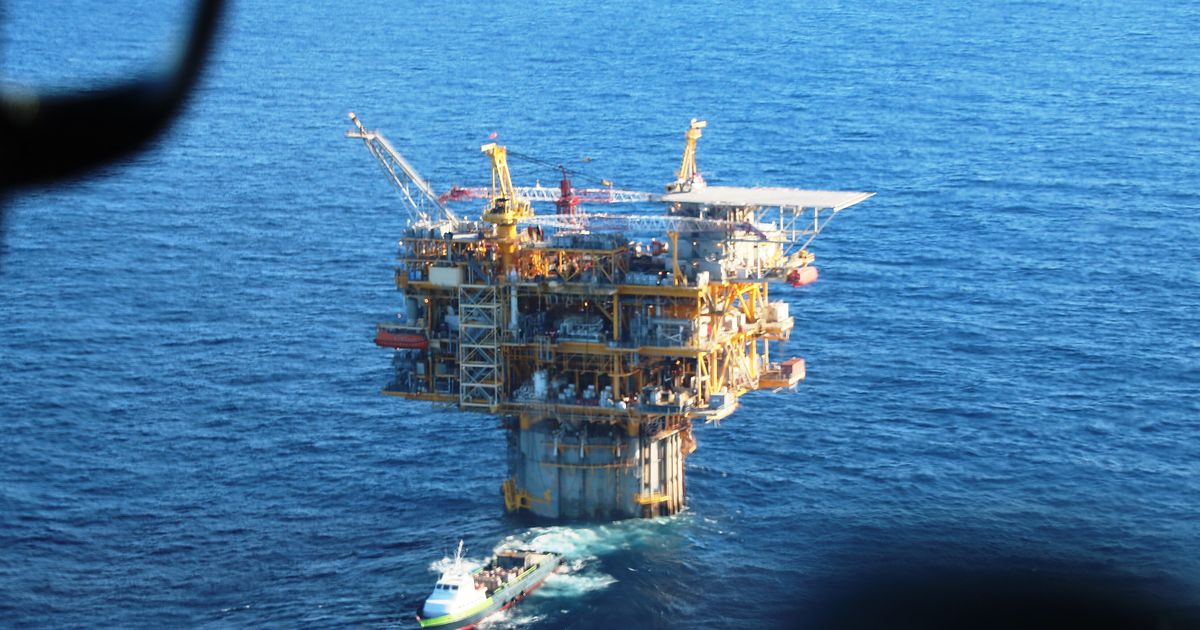
An offshore medic is the paramedic, or sometimes the nurse, who runs the sick bay on an oil rig, a platform or an offshore vessel. You usually work alone, for a hitch (one stretch living aboard) of two to four weeks. In the US Gulf, offshore paramedic jobs commonly ask for 2 to 5 years of ALS, a paramedic license, ACLS, and BOSIET or HUET. Pay is the murky part.
This guide covers rigs, platforms and the vessels that serve them, not cruise ships. Offshore openings are scarce. On November 8, 2026, our board had 19 live offshore listings out of 1,232, and none were new that week.
Offshore medic jobs at a glance
| Question | Short answer | Source |
|---|---|---|
| License | Paramedic. None of our 19 offshore listings had EMT in the title | Our board, November 8, 2026 |
| Experience | 2 to 5 years of ALS, often plus 1 year offshore, industrial or remote | Gulf postings, 2026 |
| Safety course | BOSIET, which includes HUET; refresh it within 4 years | OPITO |
| Hitch | 14 to 28 days on, the same off; 12-hour shifts plus on-call | Postings, medics |
| Pay | Too few offshore listings post pay for us to quote a figure | Our board: 1 of 19 |
| Backup | You. Gulf medevacs averaged 6.8 hours to a medical center | BSEE, 2023 |
What does an offshore medic do?
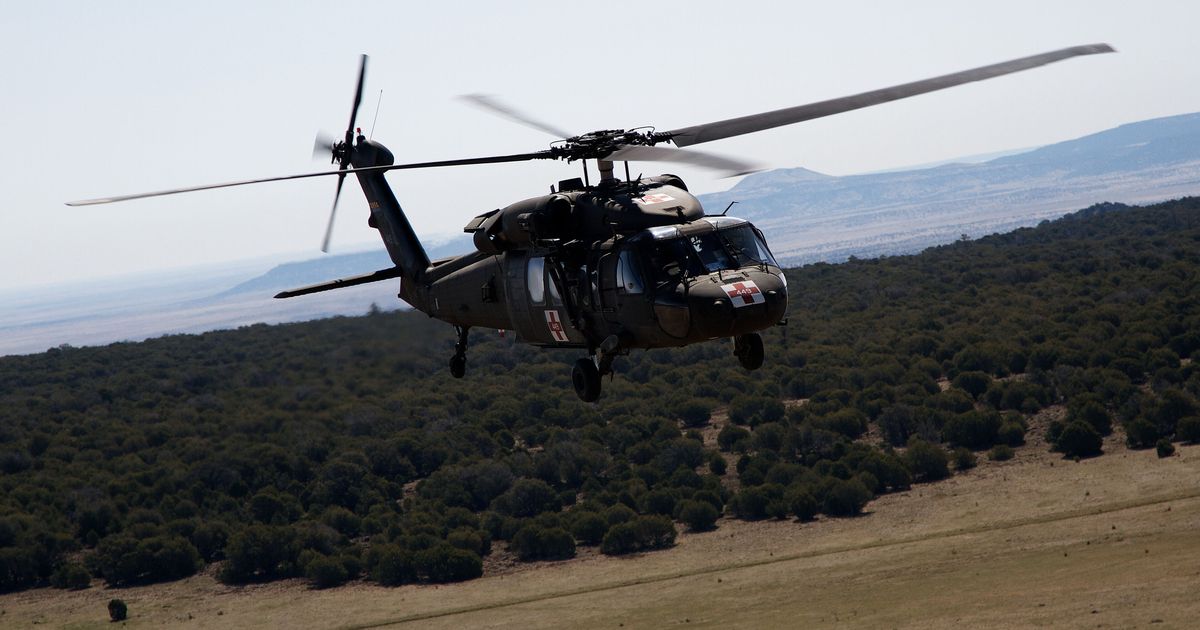
An offshore medic, or oil rig medic, is the emergency responder and the clinic for everyone aboard. You run the emergency, keep the patient going until a helicopter or boat can take them, and run sick call in between.
One current Gulf posting (November 2026) puts the medic on a vessel with about 200 crew. It lists emergency and primary care, emergency drills, first aid teaching, health talks, evacuations, and the clinic’s stock and controlled drugs.
Medics on a 2023 YouTube panel of US Gulf offshore medics added:
- treating ear infections with antibiotics, with a physician involved
- temporary dental fillings, because “there’s no dentist”
- training the rig’s rescue teams
- walking the deck with cold water to head off kidney stones
- being someone the crew can talk to when things go wrong
Medic plus safety: two jobs in one
Many offshore medic jobs are two jobs: medic and safety or admin. One Gulf posting in May 2026 was for a combined “Paramedic-HSE Advisor/Clerk” (HSE here means health, safety and environment). On our board, 5 of the 19 offshore titles named safety or HSE.
An older r/ems AMA by an offshore medic (late 2015) said many medic jobs add “Safety Officer, Compliance Officer, Radio Operator, or Rig Clerk.” Expect plain labor too: a Gulf medic on a 2023 YouTube panel learned rigging to unload a late grocery boat. Ask about the extra duties before you sign.
Offshore medic rotations: what a hitch looks like
A hitch is usually two to four weeks offshore, then the same time at home. Shifts commonly run 12 hours, with on-call after hours. Rotations are written as days on/days off, so 14/14 means two weeks on, two off.
| Rotation | Days offshore a year | Hitches a year | Where we saw it |
|---|---|---|---|
| 14/14 | about 183 | about 13 | US Gulf medics, YouTube (2023) |
| 21/21 | about 183 | about 9 | A medic on TikTok (August 2026): “three and three” |
| 28/28 | about 183 | 6 to 7 | A Gulf vessel posting (November 2026) |
| 14/21 | about 146 | about 10 | An offshore medicine career guide (July 2026) |
Any equal rotation puts you offshore about half the year. At 12 hours a day that’s about 2,190 hours, roughly 5% more than a 40-hour week, before night call-outs.
The upside is real. Home on a two-week break, “I belong to my wife and my little girl,” a Gulf offshore medic said on a 2023 YouTube panel. Ask whether travel days are paid; one Gulf posting (November 2026) reimburses travel to its port in Houma, Louisiana.
What certifications does an offshore medic need?
You need four layers: your clinical license, your life support cards, an offshore safety course, and sometimes a seafarer or security card.
| Cert | What it is | Who asks for it | How long it lasts |
|---|---|---|---|
| Paramedic license, NREMT | State license; National Registry certification | Gulf postings: a state license, NREMT or both | Your state’s and NREMT’s cycles |
| ACLS, BLS, PHTLS or ITLS | ALS, CPR and trauma cards | Both detailed Gulf postings we read | Keep current |
| BOSIET | Basic Offshore Safety Induction and Emergency Training, an OPITO standard (OPITO sets the industry’s safety training standards). 21 hours: helicopter escape, sea survival, first aid, firefighting | Gulf postings; 5 of our 19 offshore listings | Refresh with FOET, an 8-hour course, within 4 years |
| HUET | Helicopter Underwater Escape Training: getting out of a flipped, flooded helicopter. Part of BOSIET; HUET training is also sold alone | 4 of our 19 offshore listings | Ask the provider |
| STCW Basic Training | The STCW course for seafarers: survival, firefighting, first aid, personal safety. STCW is the IMO’s training convention | Vessel jobs. On a US-flagged seagoing vessel, anyone with a muster-list (emergency roster) duty needs it | Refresh every 5 years |
| UK offshore medic course | From a provider approved by the UK’s Health and Safety Executive (HSE) | UK North Sea only | Renew every 3 years |
| UK offshore medical | The fitness medical set by Offshore Energies UK (OEUK) | UK North Sea; 3 of our 19 listings | From November 1, 2026, nobody over 124 kg (about 273 lb) clothed flies to UK installations |
| TWIC | The TSA’s maritime security card | Some US vessel and port work | $127 to apply |
Don’t buy a course before you know the job
Ask before you pay. “Some employers pay for the stack once you are hired, others expect you to arrive with it,” says an offshore medicine career guide by an emergency physician (July 2026). Read the postings for your region first, then buy only what they name.
Don’t let BOSIET lapse either. OPITO allows at most 4 years between BOSIET and FOET. FOET is only open to people whose certificate is still in date.
How much experience do offshore paramedic jobs ask for?
Offshore paramedic jobs ask for 2 to 5 years of ALS, and often a year of offshore, industrial or remote work on top. That second ask is the catch that keeps most medics out. The postings we read asked for:
- “Minimum 3-5 years ALS paramedic experience” plus “at least 1 year of previous offshore paramedic experience,” flight or critical care preferred (one Gulf provider, two postings, October and November 2026).
- “2 + Years Experience” for a paramedic and safety advisor job (Gulf posting, May 2026).
- One to two years “in an industrial/offshore/remote setting” (a Louisiana posting, November 2026).
On our board on November 8, 2026, 7 of the 19 offshore listings named a license level, and all 7 named paramedic.
The way around the offshore year is remote work on land, or shallow water first. A Gulf medic on a 2023 YouTube panel was “really glad” to have started “on the Shelf,” the shallow-water platforms near the coast. That first platform was “maybe 15 miles offshore.”
Can an EMT work on an oil rig?
An EMT rarely works offshore as the rig’s medic, and offshore EMT jobs are rare. The medic is the only clinician aboard, so the offshore jobs we see ask for a paramedic or a nurse.
A Canadian primary care paramedic who worked land rigs (YouTube, October 2026) wants to go offshore, but “won’t be able to do that until I finish my next round of schooling,” because offshore wants a medic who can intubate.
For EMTs, onshore site work is the realistic start. On November 8, 2026, 102 of the 208 industrial and site medic jobs on our board had EMT in the title. Most of those titles named both EMT and paramedic.
What companies hire paramedics for oil rigs?
Mostly companies that supply medics to the oil company, not the oil company itself. The operator contracts out its medical service, and the contractor hires you:
- Offshore and remote medical providers, which staff rigs and vessels and back the medic with a doctor by phone.
- Safety services firms, which pair the medic with safety duties.
- Ambulance services with an industrial and offshore division.
- Some drilling contractors, which employ their own rig medics.
Apply to them directly. Be wary of social media accounts selling an “offshore job guide.” “Don’t buy into the ‘DM if you’re interested’,” a rig worker wrote on r/oilandgasworkers (October 2026).
US Gulf vs North Sea vs everywhere else
In the US Gulf, the job posting sets the medic’s bar. In the UK North Sea, the law sets it.
| US Gulf of Mexico | UK North Sea | |
|---|---|---|
| Who sets the bar | The operator and its contractor. The federal rule we checked for manned platforms requires a first-aid kit, not a medic | The Health and Safety Executive, under the Offshore Installations and Pipeline Works (First-Aid) Regulations 1989 |
| Clinical route | State paramedic license, NREMT or both | An experienced HCPC-registered paramedic, NMC-registered nurse, or military medic |
| Offshore medic course | None in the federal rules we checked | From an HSE-approved provider, renewed every 3 years |
| Safety course | BOSIET or HUET, per the posting | BOSIET |
| Fitness | Ask the employer | OEUK medical and weight limit |
Everywhere else, the country and the operator set the rules. For any overseas offer, ask which license and safety course they accept before you pay for anything.
Offshore medic pay: the reels vs what we can verify
There’s no honest single number for offshore medic pay, or for oil rig paramedic salary. Few postings show pay, and the published figures don’t agree.
- Our board can’t answer it yet. On November 8, 2026, 1 of our 19 live offshore listings showed pay. Too few offshore listings post pay for us to quote a figure.
- The reels are about rig crew, and many are selling something. Several of the most-watched offshore clips we pulled (July to November 2026) came from accounts selling job guides through a link in their bio. One said a first year “paid $150,000” (1.2 million views). Even its caption admits “most people earn less when they start.”
- Rig workers push back. On r/oilandgasworkers (October 2026), one wrote that “entry level positions start at about 70k.” Another said $150,000 is possible “on a busy rig,” but “you wont be home much.” Neither was talking about medics.
- The published guide figure is wide. A widely cited guide, last updated in February 2024, puts offshore medic pay at $70,000 to $120,000 a year, citing a salary-estimate site.
Run that range through a 14/14 rotation of 12-hour days, about 2,190 hours a year. $70,000 is about $32 an hour. $120,000 needs about $55 an hour before overtime, so ask how overtime works on a hitch.
A Gulf medic on a 2023 YouTube panel said the first company they worked for paid for 12 hours, and anything past that had to be justified. A Canadian paramedic who worked land rigs (YouTube, October 2026) said the hourly rate was lower than on the truck. Steady hours and a daily stipend made up the difference: “150 bucks a day and it’s tax-free.”
Questions to ask about any offshore offer
- Is it hourly, a day rate or a salary? Divide a day rate by 12 to compare it with your hourly rate.
- Are call-outs past your 12 hours paid?
- Are travel and crew-change days paid?
- Is it W-2 or 1099?
- Who pays for BOSIET, the medical and TWIC?
- Who is your backup doctor, and how fast can they get a patient off?
How to become an offshore medic, step by step
- Get your paramedic license and run busy ALS for 2 to 5 years. One Gulf provider prefers flight or critical care time.
- Hold NREMT as well as your state license. Gulf postings ask for one or both.
- Keep ACLS, BLS and PHTLS or ITLS current.
- Build remote experience on land. Site and industrial medic work teaches you to work alone, and some postings count it.
- Pick a region, then read its live postings. The US Gulf, the North Sea and vessel work want different paperwork.
- Book the course those postings name. BOSIET or HUET for the US Gulf. BOSIET plus the UK offshore medic course for the North Sea. STCW Basic Training for vessels.
- Apply directly, and take the less glamorous first post. “Sometimes you gotta pay your dues,” a Gulf medic said on a 2023 YouTube panel.
The downsides of working offshore
You’re alone, far from a hospital, away half the year, and often bored.
- You hold the patient for hours. In January 2023, BSEE (the federal offshore safety regulator) inspected 20 Gulf sites. Medevacs averaged 6.8 hours from incident to arrival at a medical center. Inspectors also found inadequate medical supplies, and only medical staff trained to use the AEDs.
- Half the year away. Birthdays and emergencies at home happen while you’re on a hitch.
- Long quiet stretches. “A lot of it is sitting,” a Canadian paramedic who worked land rigs said (YouTube, October 2026). On rigs, “it’s either very much nothing or it’s very much something.”
- Up-front costs. You may pay for BOSIET, the medical and TWIC before anyone hires you.
From the field: what offshore medics and rig workers say
These are individual accounts, not statistics.
- “I went from a couple of text messages to upside down in a fake helicopter very quickly.” A US Gulf offshore medic, YouTube panel (January 2023), on how fast it went from first contact to HUET.
- “There’s no backup.” A panelist on the same 2023 video of offshore medics, who said an offshore medic should have “hundreds of intubations under your belt.”
- “A medical license and a heartbeat.” A Gulf medic on that panel, on what their first offshore company looked for. They said they learned more from the crew than from the company.
- “Unless you know someone, you’re better off starting on shore and getting XP.” A rig worker on r/oilandgasworkers (October 2026).
- “Paramedics are being hired at $100,000+ for work in the Middle East.” A commenter in an r/ems thread on oil rig and higher-paying medic jobs (late 2025), who added: “Salary is tax free.” One person’s claim, and not specific to offshore.
Where offshore jobs show up on our board
Offshore medic jobs on our board are few: 19 on November 8, 2026, 9 of them in the US and others from the UK to Guyana. They sit on the job board with everything else, and there’s no separate offshore page yet.
If you’re building toward offshore, the closest work on land is on our industrial and site medic jobs page.