A US paramedic can work fly-in, fly-out (FIFO) paramedic jobs in Australia, but a US license is not enough. Site paramedic jobs need registration with the Paramedicine Board of Australia through the Australian Health Practitioner Regulation Agency (Ahpra). Other site jobs ask for Australian certificates instead. The one Certificate IV provider we read, the Australian Paramedical College, enrolls only Australian or New Zealand citizens, permanent residents and holders of an approved temporary visa. Every job also needs the right to work in Australia. There is no route for US EMTs or AEMTs.
This guide is for a US paramedic with years on a 911 truck who has seen an Australian mine job online. The guide covers what the Paramedicine Board of Australia asks of US training, the costs in Australian dollars (A$), the visas and what employers posted. Treat it as a move that takes months, not a contract you pick up next month.
FIFO paramedic jobs in Australia at a glance
Checked on November 15, 2026, on the Paramedicine Board of Australia’s pages, Ahpra, the Department of Home Affairs and nine live employer postings.
| Question | Short answer | Source |
|---|---|---|
| Who can | US paramedics, after Ahpra registration and with work rights | Paramedicine Board; Ahpra |
| Who can’t | US EMTs and AEMTs | Board criteria; postings |
| US degree | Bachelor’s: advice to apply for registration may follow. Associate’s: likely an A$3,500 exam in Australia first | Board criteria, Nov 15, 2026 |
| Fees | A$467 to A$4,402 before travel (calculated) | Board fees from Oct 1, 2026 |
| Visa | Sponsored (482), or Work and Holiday (462) at ages 18 to 30 | Home Affairs, Nov 2026 |
| Sponsorship | Mentioned in none of the 9 postings we read | Postings, Nov 15, 2026 |
| Posted pay | 1 of 9: Fire and Safety Australia posted A$70 to A$80 an hour | Posting, Oct 15, 2026 |
| Rosters | 8:6, 7:7 and 2:2 | Postings |
Can an American paramedic work FIFO in Australia?
Yes, but only after gates a US card does not open. Every Australian site paramedic posting we read on November 15, 2026 asked for registration with the Paramedicine Board of Australia through Ahpra. Emergency Services Officer jobs asked for Australian certificates instead. Every job needs the right to work in Australia, which registration does not give.
The three gates:
- Registration. The Paramedicine Board of Australia tells paramedics qualified overseas that “you must be registered with the Paramedicine Board of Australia (the Board) before you can practise.” Ahpra takes the application online.
- Australian certificates, for Emergency Services Officer (ESO) jobs, in place of registration.
- The right to work. Ahpra calls the visa a separate process: “Success in one process does not automatically guarantee success in the other.”
What you hold, and what Australia asks
The table’s main point: a US paramedic with a degree has a route to registration. A US EMT or AEMT has none. No row gives you the right to work.
| You hold | Australia asks | The gap | Fees | Time |
|---|---|---|---|---|
| US EMT or AEMT | Paramedic registration, or Australian ESO certificates | No route from the US | n/a | n/a |
| UMBC paramedic degree, awarded 2016 | Registration only | On the Board’s recognised list: apply directly | A$467 | Weeks |
| Other US paramedic bachelor’s | Qualification assessment, then registration | Advice to apply for general registration may be provided | A$902 | Months |
| US paramedic associate degree | Likely: assessment, A$3,500 exam in Australia, registration | The competency assessment, if assessed as AQF 6 | A$4,402 plus travel | Months |
| US paramedic certificate only | Assessment first | Must be judged comparable to an associate degree, or the advice is to upgrade | A$435 to find out | Months |
Checked on November 15, 2026, against the Paramedicine Board of Australia’s recognised list, its criteria page (reviewed November 12, 2026) and its fee schedule (effective October 1, 2026). Fees are calculated, before travel, police checks and insurance.
The order that fits what we read is registration first, then an employer willing to sponsor a visa, and site work later. None of the postings we read offered sponsorship. Three of the four site paramedic postings asked for 2 to 5 years of experience or more.
What is FIFO medic work, and who hires for it?
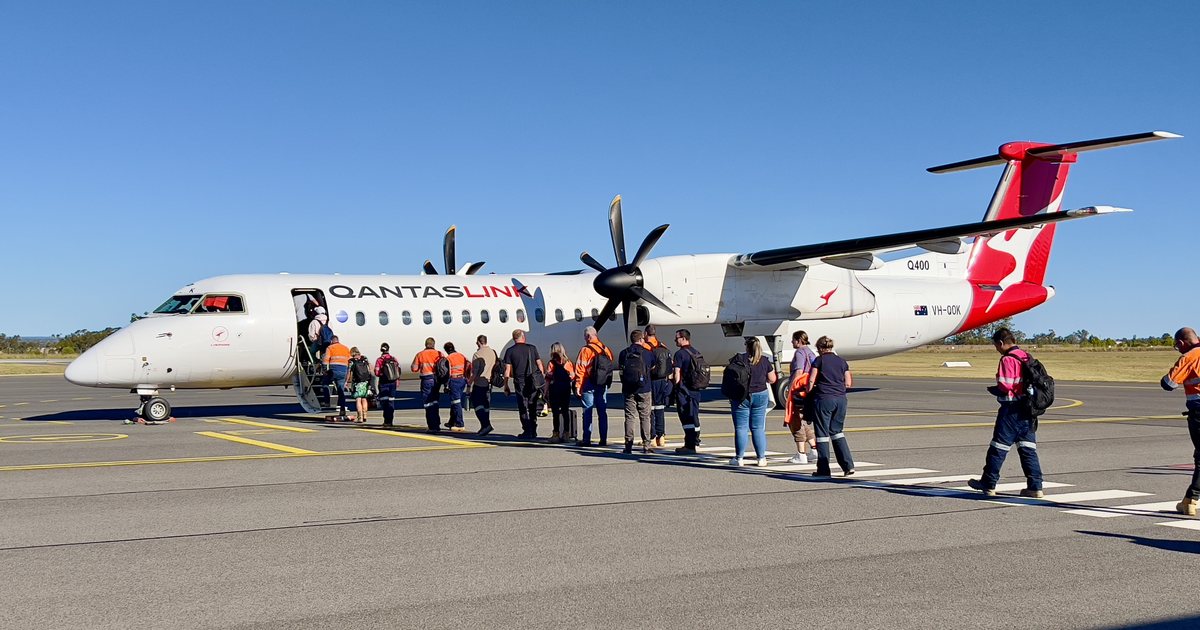
FIFO, or fly-in, fly-out, means you fly to a remote mine or resource site, work a roster such as 8 days on and 6 off, then fly home. The site medic jobs we read on November 15, 2026 came from contractors such as Fire and Safety Australia and from miners such as Fortescue and Northern Star Resources.
Two kinds of job sit under “FIFO medic”:
- Registered site paramedic. You run the site clinic and the emergency response. All four of these postings asked for Ahpra registration. Some are open to nurses too: Fortescue’s Iron Bridge job, posted November 4, 2026, is for a “Registered Nurse or Registered Paramedic.”
- Emergency Services Officer (ESO). Also called a Medical Emergency Services Officer (MESO) or Emergency Response Officer. You run rescue, fire and first response, plus first aid and drug and alcohol testing. These jobs ask for Australian vocational certificates, not registration.
In the US the same pattern is called rotational or remote site work. Our guide to remote paramedic jobs covers North Slope and oil field rotations.
What rosters do FIFO medics work?
Checked on November 15, 2026, on each employer’s live posting. “8:6” means 8 days on, 6 off. DIDO means drive-in, drive-out.
Fire and Safety Australia describes its rosters as “approximate even time.” Its Queensland roster alternates day and night shifts of 12 hours.
| Roster | Employer and job | Where | Posted |
|---|---|---|---|
| 8 on, 6 off, FIFO from Perth | Fortescue, Registered Paramedic/Nurse | Iron Bridge, WA | Nov 4, 2026 |
| 8 and 6, FIFO from Perth | Northern Star, ESO coordinator | Jundee, WA | Oct 29, 2026 |
| 2:2 or 8:6 | Fire and Safety Australia, paramedics | Pilbara, WA | Oct 15, 2026 |
| 2:2, FIFO from Perth | Red Earth Health Solutions, paramedics | WA mine sites | Feb 13, 2026 |
| 7:7, 12-hour days and nights | Fire and Safety Australia, paramedics and ESOs | Blackwater and Daunia, Qld | Oct 15 and 19, 2026 |
| 8/6 or 7/7, DIDO | Ravenswood Gold, ESO | Ravenswood, Qld | Oct 26, 2026 |
| 8/6, living in town | Northern Star, Emergency Response Officer | Kalgoorlie, WA | Oct 20, 2026 |
Does my NREMT transfer to Australia?
No. National Registry certification and a US state license are not Australian registration. The Paramedicine Board of Australia judges US training through its recognised qualifications list or a qualification assessment. Your license and NREMT results become evidence in that assessment, not a substitute for it.
There are two ways in for a US paramedic:
- The recognised list. The Paramedicine Board of Australia’s recognised list, checked on November 15, 2026, holds one US degree. That degree is the University of Maryland, Baltimore County’s Bachelor of Science in Emergency Health Services (Paramedic), award year 2016 only. A qualification must “exactly match” the institution, title and award year. A graduate who matches applies for registration directly through the Ahpra portal.
- A qualification assessment. Everyone else sends the Board a “Portfolio for the assessment of non-approved qualifications (PNAQ).” On the fee schedule effective October 1, 2026, the assessment costs A$435, paid outside the online portal. No processing time is published.
Registration also needs four standards: English language skills, criminal history, professional indemnity insurance and recency of practice. The United States is a recognised country under Ahpra’s English language standard, effective March 2025. Our reading: a medic schooled and trained in English in the US should meet it without a test. You need a criminal history check for every country outside Australia where you lived for six consecutive months as an adult. Ahpra cannot assess the application until those results arrive.
A commenter on r/Paramedics wrote in 2024: “To my knowledge, no US certified Paramedic has ever met the criteria for AHPRA registration.” The recognised list now shows one exception. The Paramedicine Board of Australia lists the 2016 UMBC degree, and says a graduate who holds a listed qualification is “qualified for general registration as a paramedic.”
Keep your National Registry current meanwhile. Our guide to NREMT recertification covers recertifying without a US agency.
What changed on November 12, 2026?
In substance, the rule reads the same. Before and after November 12, 2026, the Paramedicine Board of Australia’s criteria pointed bachelor’s-level (AQF 7) training toward advice to apply for registration. Associate-degree or advanced-diploma (AQF 6) training pointed toward the competency assessment. On that date the Paramedicine Board of Australia rewrote and numbered the criteria.
The Board kept the old “substantially equivalent” criteria in a legacy PDF. That PDF says: “On 12 November 2026 the Paramedicine Board of Australia changed the assessment criteria it uses to assess the qualifications of internationally qualified Paramedicine practitioners.” The current criteria are on the Board’s “Assessment criteria for international qualifications” page, reviewed November 12, 2026. The Paramedicine Board of Australia’s news page listed nothing about the change on November 15, 2026.
What the current criteria ask
Under the criteria the Paramedicine Board of Australia has used since November 12, 2026, a qualification is assessed in three areas, each with two levels:
- Professional registration. Criterion 1.1: a licensing body recognised your qualification for registration as a paramedic in the “country, state or province” where you trained, and you passed any exam it set. Criterion 1.2: where no licensing body exists, the qualification let you practice as a paramedic.
- Quality assurance. Criterion 2.1: a body outside your school accredited the program against published paramedicine standards. Criterion 2.2: “a legally authorised academic institution” issued it, and it meets “the minimum requirements for safe and ethical practice in Australia.”
- Educational level. Criterion 3.1: comparable to a bachelor’s degree at AQF level 7. Criterion 3.2: comparable to an associate degree or an advanced diploma at AQF level 6.
The assessment ends in one of three outcomes:
- Outcome 1, “Advice to apply for general registration,” may be provided when a portfolio demonstrates alignment with Criteria 1.1, 2.1 and 3.1.
- Outcome 2, “Advice to apply for the Paramedicine competency assessment,” may be provided when a portfolio demonstrates alignment with 1.1 or 1.2, 2.1 or 2.2, and 3.1 or 3.2. Criteria 1.2, 2.2 and 3.2 are what the Paramedicine Board of Australia calls its “threshold requirements.”
- Outcome 3, “Advice to upgrade qualification,” may be provided when a portfolio misses a threshold. The qualification-assessment page words it “Consider alternative qualification options.”
A qualification assessment is advice. In the Paramedicine Board of Australia’s words, the assessment “does not result in a registration decision.”
What the documents show changed
Checked on November 15, 2026, against the current criteria page (reviewed November 12, 2026), the legacy PDF, and the Board’s former Qualifications page as archived on January 13, 2026.
- The levels did not move. The bachelor’s level (AQF 7) leads to advice to apply for registration, as before. The associate degree or advanced diploma level (AQF 6) leads to the competency assessment, as the former page’s “relevant qualification” rules did.
- Numbering. The criteria are now numbered 1.1 to 3.2, with three numbered outcomes.
- Where you trained. Criterion 1 now says “country, state or province.” The former page said “country.” Our reading: the new wording fits US licensing, which states do.
- The lower quality bar. Criterion 2.2 now asks for a legally authorised institution and Australia’s minimum requirements. The former relevant-qualification rule asked that the program covered evidence-based practice, supervised clinical placements and medication management.
- Outcome 3. The current page’s Outcome 3 is advice to upgrade your qualification. The former page recommended “completion of a paramedicine program in Australia.”
- Reassessment. The current page publishes a reassessment route: ask within 28 days, and the Board says it will reply within two months. The archived former page had none.
The archived capture is from January 13, 2026, so a change between January and November can’t be ruled out.
Can I skip Ahpra by working as an Emergency Services Officer?
Not from the US. Emergency Services Officer (ESO) jobs at Australian mines skip paramedic registration, but all five ESO postings we read on November 15, 2026 asked for Australian vocational certificates. The one Certificate IV provider we read, the Australian Paramedical College, enrolls only Australian or New Zealand citizens, permanent residents and approved visa holders.
What the five ESO postings asked for:
- Executive Risk Solutions (casual, Perth-based, posted November 5, 2026): a Certificate III in Emergency Response and Rescue (RII30719) or in Public Safety, the HLT41120 Certificate IV in Health Care, “3+ years experience in an Emergency Services role within the mining industry,” and “Australian Working Rights.”
- Northern Star Resources (two postings, Kalgoorlie and Jundee, posted October 20 and 29, 2026): “Certificate III Mine Emergency Response and Rescue,” a Certificate IV in Health Care “or equivalent,” and “relevant right to work.”
- Fire and Safety Australia (Queensland coal, posted October 19, 2026): “Certificate III Emergency Response or equivalent,” advanced first aid, a Queensland security licence, a Coal Board Medical and the coal mines’ Standard 11 induction.
- Ravenswood Gold (Queensland, posted October 26, 2026): RII30719 and a “Certificate IV in Emergency Medical Response (or equivalent).”
Three of the five asked for a Certificate IV in Health Care or equivalent, and three asked for work rights. Only Executive Risk Solutions asked for years of ESO work in mining.
The certificates are the second wall:
- Certificate IV in Health Care (HLT41120). The Australian Paramedical College runs it over 18 months. The course adds a 5-day clinical workshop at a campus and 80 hours of clinical placement, both in Australia.
- Certificate III in Emergency Response and Rescue. Each registered training organisation sets its own price, and we quote none. Training.gov.au lists RII30719 as superseded and RII30726 as the current version since September 2, 2026.
The visa list cuts both ways. On the Department of Home Affairs’ skilled occupation list (last updated August 6, 2025, read November 15, 2026), Emergency Service Worker (441211) is on the Regional Occupation List only. The Skills in Demand visa (subclass 482) does not cover it. The employer-sponsored stream of the Skilled Employer Sponsored Regional visa (subclass 494) does.
So the ESO answer rests on three things we could see: Australian certificates, a Certificate IV provider that needs Australian residency or an approved visa, and no ESO posting that mentioned sponsorship. That is why the ESO route is not open from the US.
A former mines rescue officer with 17 years in mining put the competition bluntly on r/ParamedicsAU in June 2026: “MESO work has no shortage of candidates.”
Which visa lets a US medic work a FIFO roster?
As of November 15, 2026, two visas fit most US medics. The Skills in Demand visa (subclass 482) needs an employer to sponsor you. The Work and Holiday visa (subclass 462) is open to US citizens aged 18 to 30. Home Affairs usually limits the 462 to 6 months with one employer and leaves it off its offshore list.
The table’s main point: the 482 is the visa for a career move. The 462 is a short window for a young paramedic who already holds registration. Visa rules and fees change, so read the Department of Home Affairs’ own pages before you apply; this guide isn’t migration advice.
| Visa | Who | Limit | Offshore | Cost |
|---|---|---|---|---|
| Skills in Demand (482), Core Skills | Sponsored, in a listed occupation | Your sponsor only; up to 4 years | Allowed | From A$4,015 |
| Work and Holiday (462) | US citizens aged 18 to 30 | Usually 6 months per employer; 12-month stay | Not on the list | A$840 |
Checked on November 15, 2026, on the Department of Home Affairs’ visa pages. The 482 page was updated November 2, 2026, its Core Skills stream page October 12, 2026, the first 462 page November 5, 2026, and the offshore page February 28, 2025.
The Skills in Demand visa (subclass 482). The Core Skills stream needs your occupation on the Core Skills Occupation List. On the Department of Home Affairs’ list, read November 15, 2026, Ambulance Officer (411111) and Intensive Care Ambulance Paramedic (411112) were both on it. The Core Skills stream page, updated October 12, 2026, asks for at least 1 year of relevant work experience. The same page says you “work only for your sponsor or associated entity, unless you are exempt.” Home Affairs says the visa is for employers who “can’t source an appropriately skilled Australian worker.”
The Work and Holiday visa (subclass 462). From the Department of Home Affairs’ page, updated November 5, 2026:
- As of November 2026, applicants must be 18 to 30 years old (inclusive) when they apply.
- As of November 2026, Home Affairs says: “Usually, you can only work for the same employer for 6 months.”
- The US has no annual cap on first visas.
- A US applicant needs “a Senior Secondary Certificate of Education or equivalent.” A US passport meets the English requirement.
- Home Affairs expects about A$5,000 for your stay, and processing takes around three months.
Offshore work. The Department of Home Affairs’ offshore page, updated February 28, 2025, lists the visas for non-citizens who work on an Australian resources installation. Other than permanent residence, they are the 482, the subclass 400 short-stay specialist visa and, for tanker crew, the subclass 988. The Work and Holiday visa is not on that list.
Flying in from the US for each rotation. Each rotation is work in Australia, so you need a visa that allows it. The postings we read fly crews from Perth or leave the trip to you. Fire and Safety Australia’s Western Australia posting, from October 15, 2026, prefers candidates in Western Australia. Applicants from the eastern states “will need to arrange and fund your own travel to Perth.”
On r/AusMining in August 2026, a New Zealand tradesman described getting a FIFO start in six weeks. A commenter replied that he had “working rights in the country,” and “That’s not the same as some guy on a WHV with no skills or experience.” WHV is a working holiday visa.
Do Australian mines sponsor visas for paramedics?
None of the nine Australian site medic and ESO postings we read on November 15, 2026 mentioned visa sponsorship, and three asked for work rights. Paramedic occupations were on the Core Skills Occupation List that day, so an employer can sponsor a Skills in Demand visa (subclass 482). No posting we read offered one.
The nine came from Fire and Safety Australia (three), Northern Star Resources (two), Fortescue, Red Earth Health Solutions, Executive Risk Solutions and Ravenswood Gold. That is one day’s reading, not a census. The three that asked for work rights were Executive Risk Solutions (“Australian Working Rights”) and both Northern Star postings (“relevant right to work”).
State ambulance services have hired paramedics from overseas. The NSW Government said on September 4, 2026 that NSW Ambulance’s new intake of 16 came from places “including, the UK, Canada, USA, New Zealand and interstate.” The release does not say where any of them trained or whether any were sponsored, so ask the service directly.
Can a US EMT or AEMT work FIFO in Australia?
No. There is no route for US EMTs or AEMTs. Under the criteria the Paramedicine Board of Australia has used since November 12, 2026, a qualification must have been recognised for registration as a paramedic. Where no licensing body exists, it must have let you practice as one. ESO jobs need Australian certificates instead.
On paper, one opening exists, and the postings close it. A US EMT aged 18 to 30 could get a Work and Holiday visa, which allows up to 4 months of study (Department of Home Affairs, page updated November 5, 2026). But three of the five ESO postings we read asked for a Certificate IV in Health Care or equivalent, an 18-month course at the Australian Paramedical College. Four months of study does not cover that.
If you want rotation work as an EMT or AEMT, start in the US. Our industrial medic guide covers site work that hires EMTs.
How long does Ahpra registration take, and what does it cost?
Ahpra’s page for international practitioners says the initial review takes 14 to 21 days and the full assessment up to 6 weeks. No time is published for the qualification assessment most US paramedics need first. Fees on the Paramedicine Board of Australia’s schedule, effective October 1, 2026, add up to A$902, or A$4,402 with the competency assessment (calculated).
Checked on November 15, 2026, on the Paramedicine Board of Australia’s fee schedule and competency assessment page, Ahpra’s page for international practitioners and the competency assessment candidate handbook.
| Step | Fee | Time | Source |
|---|---|---|---|
| Qualification assessment | A$435 | Not published | Board fees |
| Competency assessment, if advised | A$3,500; re-sit A$1,000 per part | Results within 8 weeks | Board; handbook |
| Registration application | A$206 | Initial review 14 to 21 days; full assessment up to 6 weeks | Board fees; Ahpra |
| General registration, per year | A$261 (A$303 in NSW) | Renew by November 30 | Board |
| Total (calculated) | A$467, A$902 or A$4,402 | Our estimate: 3 to 12 months | Our math |
The totals leave out travel. The competency assessment runs in person at Edith Cowan University in Joondalup, Western Australia, and the University of the Sunshine Coast in Sippy Downs, Queensland. Candidates pay their own travel and accommodation. Session dates are not published: candidates hear them after they apply.
Other timing details from Ahpra’s page for international practitioners:
- Ahpra’s FAQ gives different times: a review in 7 to 14 days and an outcome in 4 to 6 weeks.
- Ahpra calls December 2026 to February 2027 its peak period.
- Criminal history results are valid for three months.
Our estimate, not a published figure, is 3 to 6 months without the competency assessment and 6 to 12 months with it. Then comes the job search. Fire and Safety Australia’s Western Australia posting asked for 3 or more years on the road. Its Queensland posting asked for 2 to 5 years in a similar FIFO or DIDO role. Fortescue asked for at least 5 years.
How much do FIFO paramedics make?
Few Australian site postings show pay. Of the nine we read on November 15, 2026, one posted a rate. Fire and Safety Australia posted A$70 to A$80 an hour for its remote Western Australia paramedic job on October 15, 2026. Another posting showed a bonus but no base rate. No figure here is a promise of pay.
Checked on November 15, 2026, on each employer’s live posting.
| Employer and job | Posted pay | Roster | Posted |
|---|---|---|---|
| Fire and Safety Australia, paramedics, WA | A$70 to A$80 an hour | 2:2 or 8:6 | Oct 15, 2026 |
| Northern Star, Emergency Response Officer | Base not posted; “Quarterly bonus up to $18K per annum” | 8/6, living in town | Oct 20, 2026 |
| Red Earth Health Solutions, paramedics | “Competitive rates” | 2:2 | Feb 13, 2026 |
| Six other postings | Not posted | Various | Oct to Nov 2026 |
Northern Star’s posting prints “$18K” with no currency. The job is a 12-month fixed-term ESO job based in Kalgoorlie, not a FIFO job.
FIFO pay has to beat Australian on-road pay, and medics say it doesn’t always. A former Queensland coal-mine paramedic wrote on r/ParamedicsAU in February 2026 that site pay was “definitely less than you would make working for a state service.” A Queensland Ambulance Service paramedic wrote there in October 2026 of “making 170K without picking up overtime on my days off,” adding that “a lot of this money is penalties.” These are single accounts, not pay data.
Social video tells a bigger story. One FIFO clip with more than 600,000 views in 2026 promised six-figure pay for a mine job needing “no experience.” That clip was about general mine work, not medic work, and it was not a posting.
Is FIFO pay tax-free for an American?
No. The IRS says US citizens are “subject to tax on worldwide income from all sources.” Its own example says a 28-days-on, 28-days-off worker who goes home to family in the US cannot claim the foreign earned income exclusion. In our reading, a medic who flies home between Australian rotations fits that example. Australian tax is not covered here.
The IRS example, from its page on tax homes, updated February 6, 2026:
“You are employed on an offshore oil rig in the territorial waters of a foreign country and work a 28-day on/28-day off schedule. You return to your family residence in the United States during your off periods. You are considered to have an abode in the United States and do not satisfy the tax home test in the foreign country. You cannot claim either of the exclusions or the housing deduction.”
Two more IRS rules:
- Travel days over water. The IRS page for the 330-day physical presence test was updated March 14, 2026. That page says that when you leave the United States or return to it, “the time you spend on, or over international waters does not count as time in a foreign country.”
- Social Security and Medicare. The IRS says these taxes “continue to apply” to wages for work abroad for an American employer.
A medic who moves to Australia, home and family included, is in a different position. The IRS ties your abode to where you keep your family, economic and personal ties. The tax section of our overseas paramedic contracts guide covers the exclusion and its tests. This isn’t tax advice: check your setup with a tax professional who handles expat returns.
From the field: what paramedics say about FIFO in Australia
These are individual accounts from public posts, not statistics.
- “FIFO work is not designed for inexperienced clinicians.” An Australian paramedic with more than 10 years on the road (r/ParamedicsAU, May 2026): “you will be working alone, with little training and less support.”
- “Extremely overwhelming and challenging.” A 2025 paramedicine graduate who had worked FIFO for a year, in the same thread, describing “a massive learning curve without any mentoring.”
- “Our first task in the morning would be drug testing.” A Queensland rescue paramedic who left the job five years earlier (r/ParamedicsAU, June 2026), on tests that ran “around 2 hours” most days.
- “A 5 year journey from start to end.” A US-trained paramedic now with an Australian state ambulance service (r/ems, February 2025). Permanent residency came through marriage, then an Australian Bachelor of Paramedicine and 12 months of job hunting. “My scope of practice in my current role is lower than back home.”
- “I know Acadian in Louisiana bring us over.” An Australian paramedic on r/ems (September 2026), asking about US jobs. The traffic runs both ways.
Where Australian FIFO jobs show on our board
On November 15, 2026, our industrial and site medic jobs page had 271 listings. Australia, with 9, was among the eight places it lists. None of the nine sample listings that visitors see before logging in was Australian. The page’s pay figures use US listings only, “because other countries post in their own currencies.”
Members see the Australian listings on the board with everything else, each one checked by professionals. Since November 15, 2026, pay on Australian, Canadian and New Zealand listings shows as A$, CA$ or NZ$, not as a bare ”$.” Check each Australian listing for two things before you apply: Ahpra registration and the right to work.
For rotation work you can take on a US card today, see our guides to remote paramedic jobs and offshore medic jobs.